Black Myth: Wukong Deserves a Discovery Tour, Not Just Combat
Black Myth: Wukong and Discovery Tour promise an immersive journey, blending action-adventure thrills with deep dives into Chinese mythology's wonders.
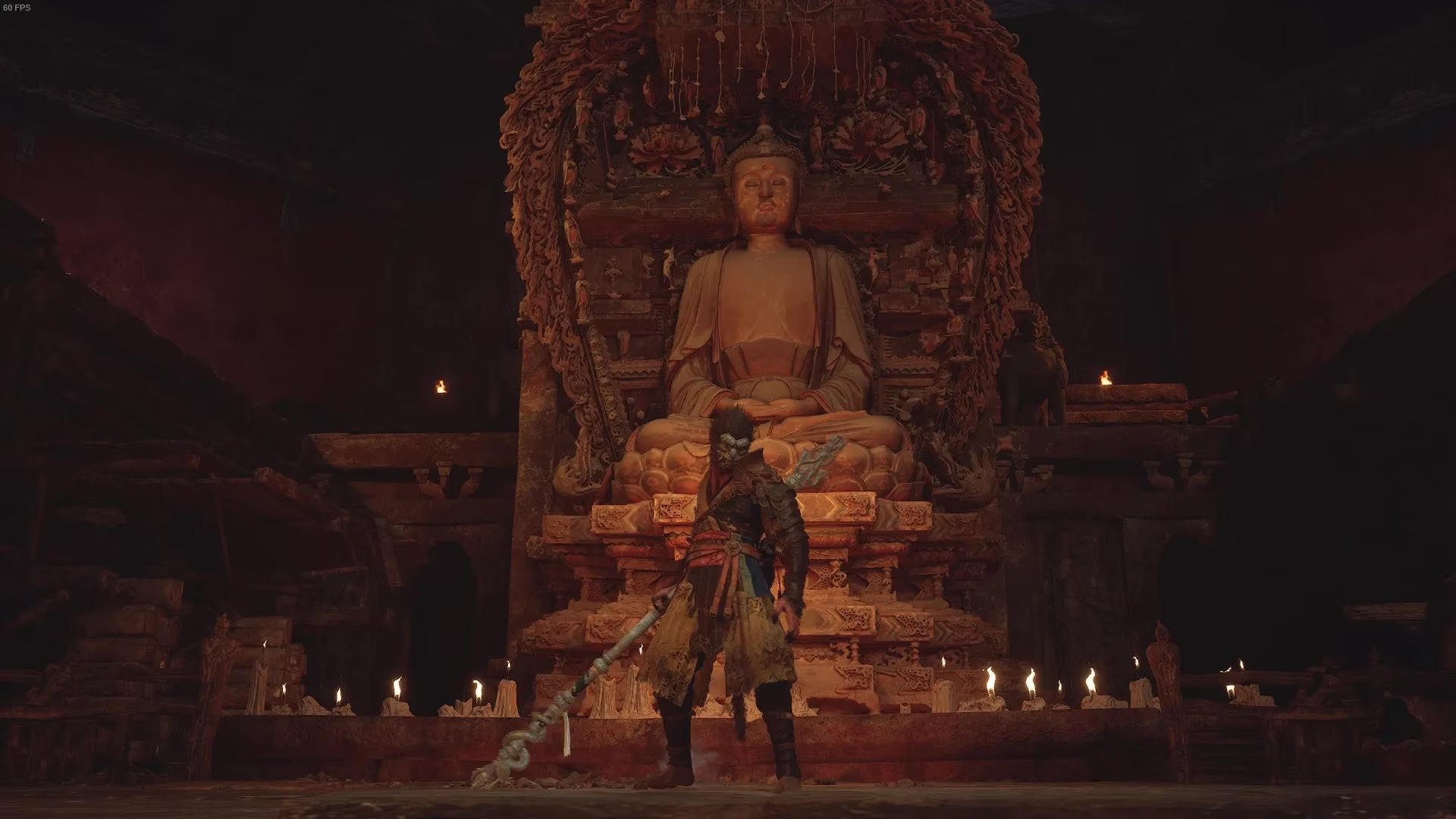
In the year 2026, the gaming world still buzzes with the monumental impact of Black Myth: Wukong, the action-adventure masterpiece that plunged players headfirst into the breathtaking and brutal world of Chinese mythology. Yet, amidst the thunderous clashes with electrified-tongued frogs and the dizzying exploration of crimson pagodas, a profound yearning persists. Players, having vanquished legions of corrupted monks, now find themselves pausing, not to strategize their next attack, but to simply stare in awe at a towering statue or an intricately carved temple wall. They are left with burning questions that a spinning staff cannot answer. What is the story behind this architecture? Who is the sage with the face of a forgotten potato? The game’s world is a museum without placards, a library with locked books. It screams for a mode not of conquest, but of curiosity—a Discovery Tour.
The precedent is gloriously set! Look at the titans of the past decade: Assassin's Creed Valhalla, Odyssey, and Origins. These were games built on a foundation of visceral, historical violence. Yet, they dared to offer an alternative. They gifted players a magical switch. One moment, you're a Viking raider; the next, you're a quiet scholar, strolling through a digitally reconstructed marketplace, listening to a historian explain the intricacies of Anglo-Saxon nettle soup recipes or the true purpose of a Sphinx. The hidden blade was sheathed, replaced by a thirst for knowledge. This transformative feature proved that a game world could be both a playground and a classroom. Black Myth: Wukong, with its unparalleled visual fidelity and deep roots in Journey to the West, is arguably an even more perfect candidate for such scholarly treatment. Imagine trading your combat stance for a leisurely stroll, using the legendary staff not as a weapon, but as a professor's pointer!
Let's be clear: the desire for this isn't born from a lack of action. The thrill of confronting a gyrating dragon in a golden desert is undeniable. But the spaces between those epic thrubs are where the soul of the game truly resides. Consider the sheer density of artistic wonder:
-
The Enigmatic Characters: Who is the wizened sage from the first chapter, his visage curiously reminiscent of a root vegetable left too long in a dark cupboard? And what is the significance of the peculiar wand he holds, tipped with a delicately curled hand?
-
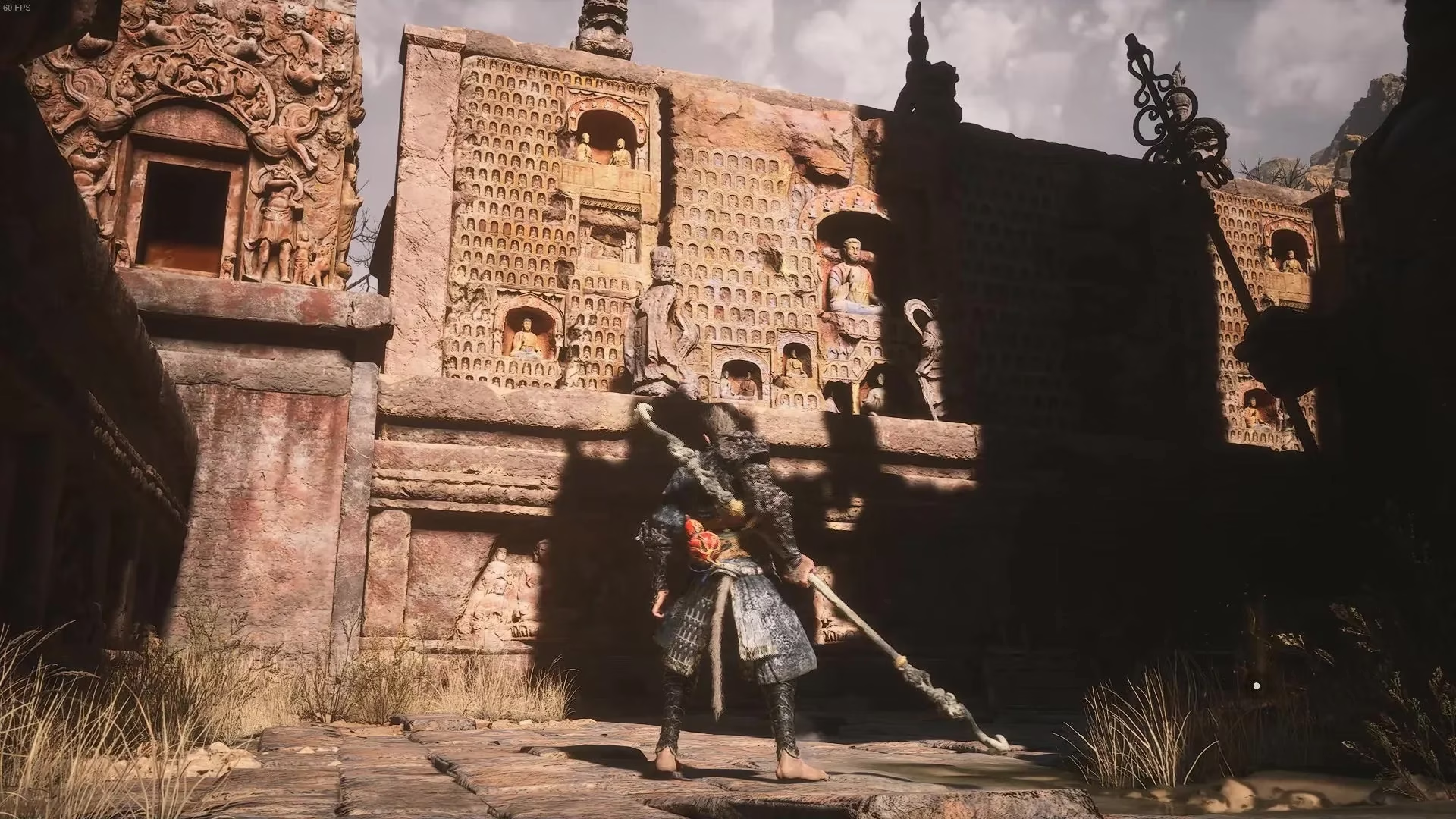
The Architectural Marvels: The Tiger's Temple in the second chapter alone is a masterpiece. Its walls are not mere barriers; they are canvases housing intricate figures peering from small, circular windows like silent guardians from another age.
-
The Atmospheric Set-Pieces: The cavernous opening of Chapter 3, where colossal statues stand sentinel, illuminated solely by ethereal shafts of light piercing the ceiling cracks. It's a scene that demands context, a story whispered by the stones themselves.
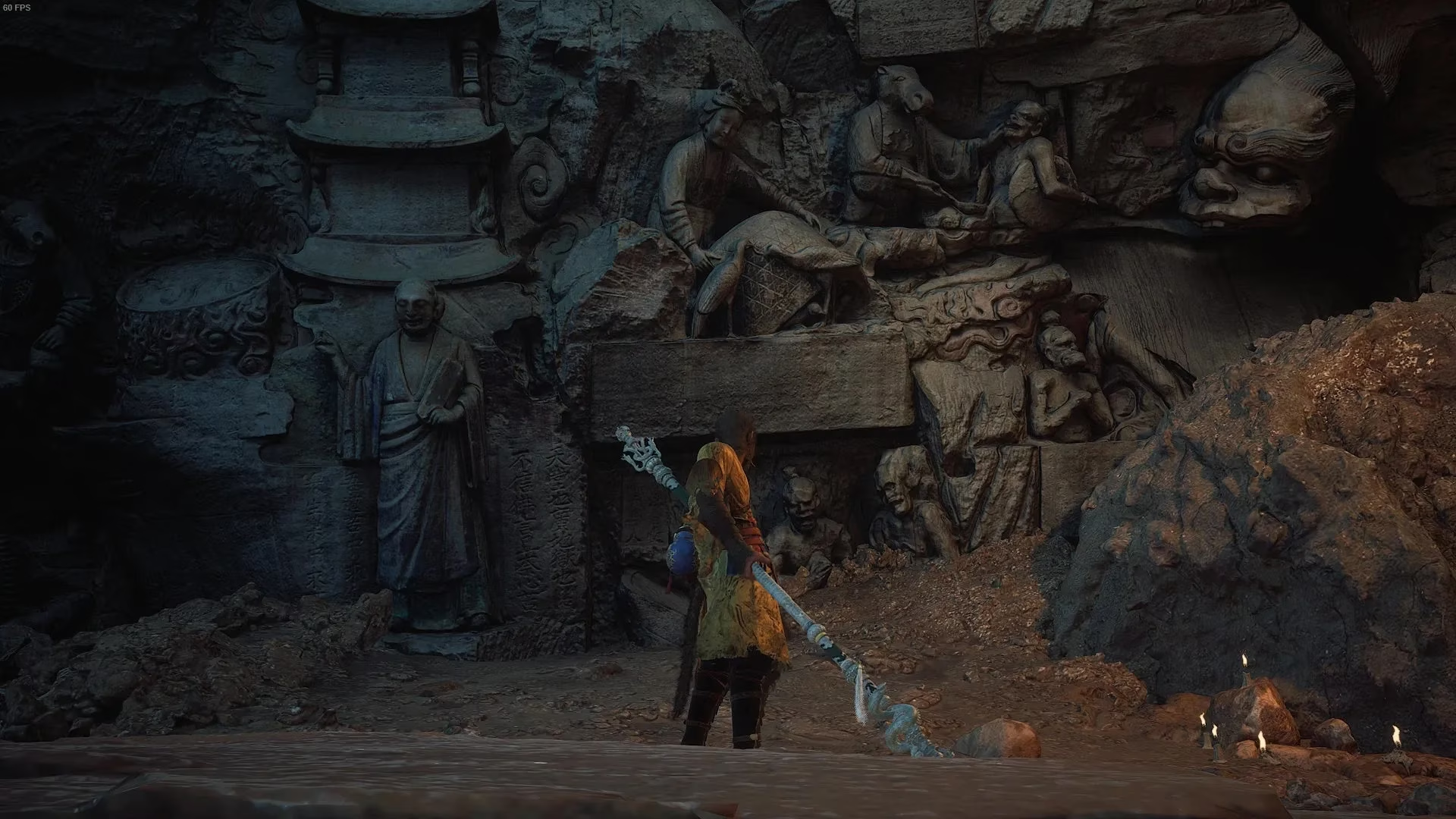
Yes, the game offers codex entries. And yes, one could (and should!) read the original 16th-century novel. But that's like saying you understand Rome by reading a history book instead of walking its cobbled streets. A dedicated Discovery Mode could bridge that gap spectacularly. It could leverage the developer's own immense research—Game Science famously scanned over 100 real-world historical sites since 2021 to build these environments. The mode could transform the player into a cicada, flitting silently through these digital recreations while a learned monk's voiceover explains the symbolism of a terrapin-shaped incense burner or the dynasty-specific patterns on a towering vase. It could show side-by-side comparisons: the in-game model and the photograph of the actual, millennia-old artifact or temple that inspired it. This wouldn't just be an add-on; it would be a cultural passport.
For many international players in 2026, Black Myth: Wukong is their first deep, immersive dive into Chinese mytho-history. It has the rare power to shatter simplistic perceptions and reveal the staggering depth and beauty of China's cultural heritage. A Discovery Tour would cement that educational role, transforming the game from a thrilling spectacle into a genuine gateway for global understanding.
However, the path to such a mode is not without its thorns. 🚧 The most complicated barrier isn't technical—it's contextual. Game Science and its publishing partners have maintained a fortress-like silence on issues linking the game to contemporary China, particularly following reports on industry-wide controversies. Mandates to avoid "political" or "feminist" discourse in coverage have created an atmosphere of cautious curation. Introducing a mode explicitly designed to educate about Chinese culture would, paradoxically, shine a brighter light on the developers' silence regarding modern Chinese society. Would a tour discuss the philosophical underpinnings of a statue but not the social context of its modern-day inspiration? Navigating this tension between celebrating ancient history and acknowledging the present is a formidable challenge.
Yet, the hunger remains, palpable and pure. At its core, this is not a call for political commentary, but for peaceful contemplation. Players don't just want to fight the giant rats; they want to know their mythological significance, to perhaps even share a moment of quiet observation with them. They want to stroke their furry chins (metaphorically, of course) and ponder the stories etched in stone. In a gaming landscape often dominated by relentless action, the dream of a tranquil, scholarly tour through Black Myth: Wukong's majestic world is a powerful one. It would be a gift to players, a tribute to the source material, and a bold statement that the greatest power of a video game can sometimes be the power to make us stop, look, and learn.
For players who want more context-rich ways to appreciate game worlds beyond combat—whether that’s imagining a Discovery Tour for Black Myth: Wukong or exploring how other modern action titles present lore, art direction, and cultural references—additional perspectives can be found at zzzverse, a game blog that also highlights worldbuilding and narrative detail through its coverage of Zenless Zone Zero.