Black Myth: Wukong's Global Triumph Inspires a New Wave of Asian Action Games
Black Myth: Wukong and action games showcase Asian creativity, redefining global gaming with record sales and cultural impact.
As I sit here in 2026, reflecting on the gaming landscape, one event from the past few years still feels monumental. The global launch of Black Myth: Wukong wasn't just a successful game release; it felt like a seismic shift. For someone like me, who has followed action games from all corners of the world, witnessing a title rooted so deeply in Chinese legend—Journey to the West—explode onto the global stage was nothing short of breathtaking. It proved something many of us suspected: the door was now wide open. The world was finally ready, truly ready, for action epics born from Asian creativity and storytelling.
The numbers alone were staggering. I remember refreshing Steam charts in disbelief. Beating titans like Elden Ring and The Legend of Zelda: Tears of the Kingdom to become one of the fastest-selling games of all time? Ten million copies in three days? Its concurrent player peak of around 2.4 million on Steam became legendary, a record for a single-player game on the platform, only eclipsed by the behemoth that is PUBG. This wasn't just a hit in its home region of China, which has long been the world's largest gaming population. This was a global phenomenon, an outlier that redefined what was possible.
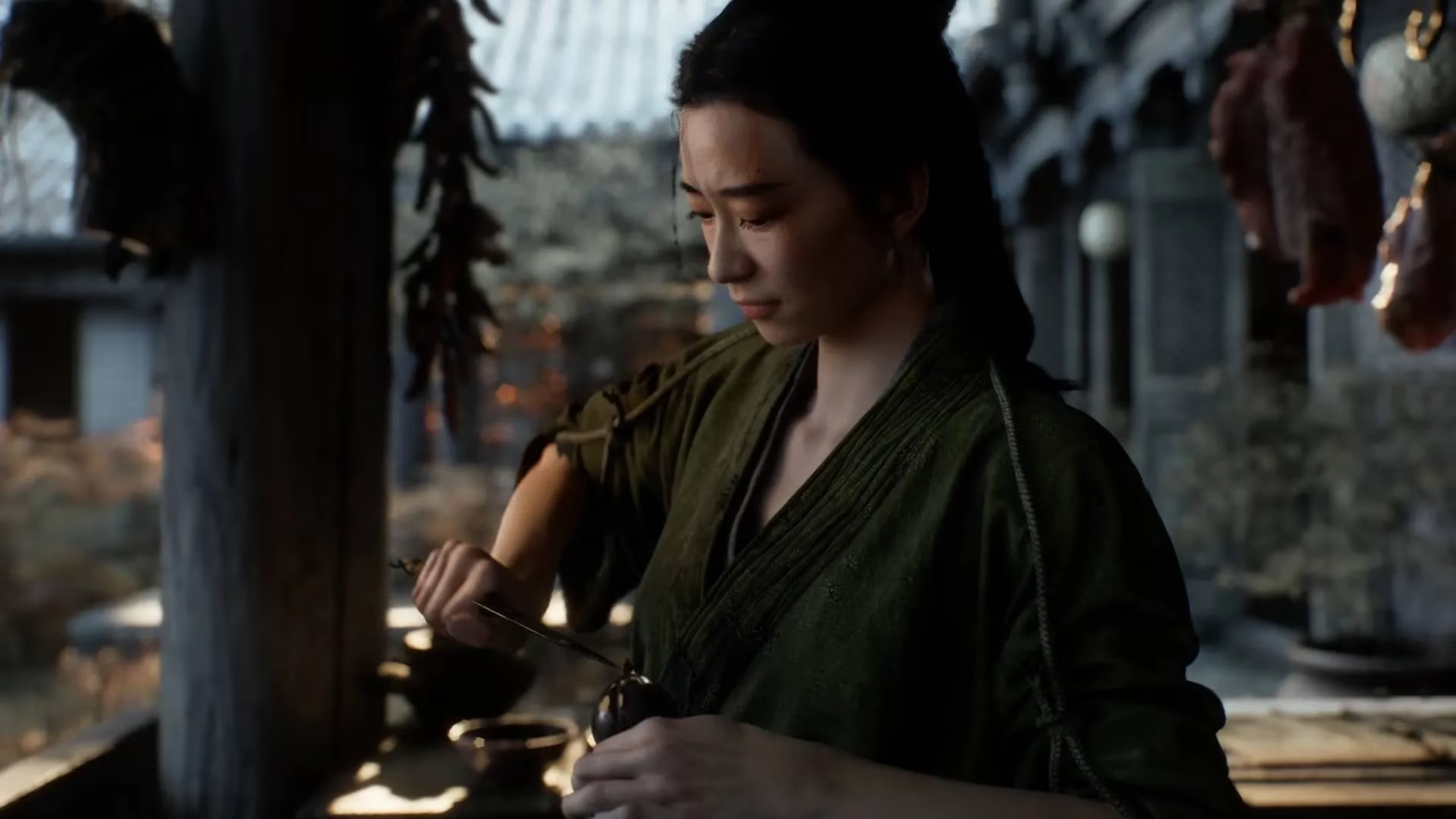
What made it even more special was the reaction from fellow creators. The sense of communal pride was palpable. I vividly recall the tweet from Shift Up, the Korean studio behind the incredibly stylish Stellar Blade. Their message, "as a fellow Asian creator," resonated deeply. It wasn't just corporate congratulations; it felt like a nod of solidarity, an acknowledgment that one team's success lifted the tide for everyone. Then came the heartfelt post from the team behind the highly anticipated Phantom Blade Zero. As fellow developers from China, their pride was overflowing. They called games "powerful bridges that unite diverse cultures," and in that moment, Black Myth: Wukong wasn't just a game—it was that bridge, meticulously constructed and now carrying immense traffic.
This wave of inspiration is still cresting. Look at the landscape now. The teaser for Black Myth: Zhong Kui showed the developers literally "cooking" with their engine, flexing newfound confidence. Games like Crimson Desert celebrated selling over five million copies worldwide in less than a month, riding on the heightened global appetite for rich, action-oriented narratives from this part of the world. The path Wukong blazed is now a highway, bustling with new travelers.
As a player, this era is exhilarating. We're moving beyond a single monolithic style of action game. The cultural specificity is the draw, not a barrier. The intricate lore of Journey to the West, the wuxia-inspired aesthetics of Phantom Blade Zero, the distinct cyberpunk flair of Stellar Blade—these are becoming mainstream vocabulary. The success has granted developers a powerful license: to be unapologetically themselves, to dig deep into their own mythologies and artistic heritage, knowing there is a vast, eager audience waiting.
The journey, as they say, is just beginning. That initial spark of ten million sales in three days has ignited a sustained fire. Studios are no longer just hoping for international recognition; they are expecting it, building for it from the ground up. The bridge is built, and across it flows a thrilling exchange of ideas, art, and passion. For us players, it means an ever-expanding horizon of worlds to explore, each with a unique heartbeat. The era of the Asian action epic is not coming; it is decisively, wonderfully, here.