The Hidden Physical Toll of Bringing Arthur Morgan to Life: A Motion Capture Actor's Story
Red Dead Redemption 2 and Arthur Morgan captivate with immersive storytelling and Roger Clark's authentic, unforgettable performance.
As I sit here in 2026, reflecting on the games that defined a generation, my mind keeps drifting back to the sprawling plains and snow-capped mountains of Red Dead Redemption 2. It wasn't just the train robberies or the quiet moments of fishing that hooked me; it was the man at the center of it all—Arthur Morgan. His gait, his weary sighs, the way he rubbed his nose in thought—these weren't just programmed animations. They were the soul of a character, painstakingly carved into the digital world by an actor named Roger Clark. And as Clark himself revealed, the price of that authenticity was paid in pure, physical agony, starting with a simple, torturous movement: the crouch-run.
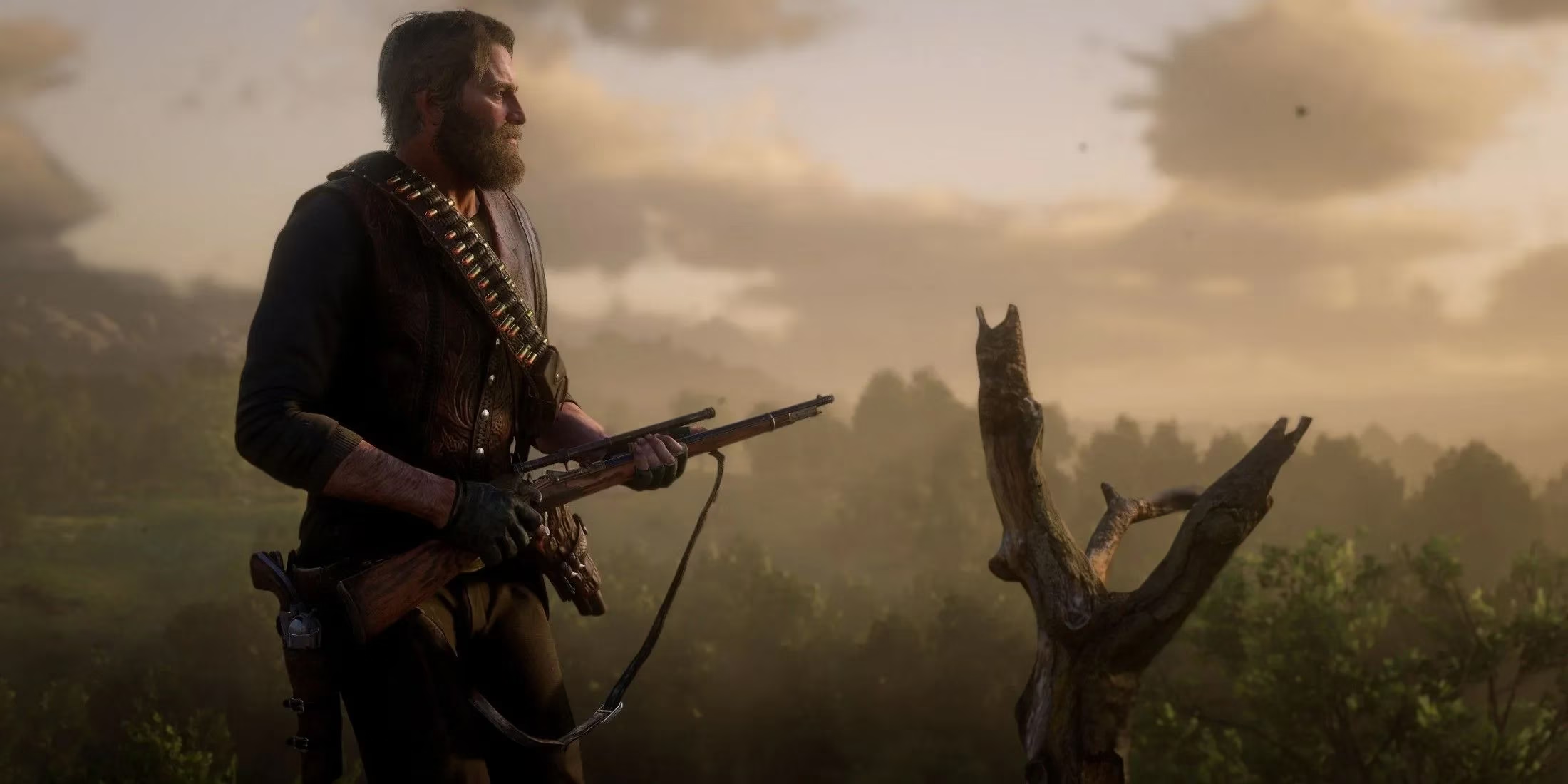
People often ask me what the hardest part of the whole experience was. They expect me to talk about the emotional weight of Arthur's final chapters or the intensity of recording those dramatic campfire confrontations. But the truth is far more visceral. It was the crouch running. We crouch-ran for what felt like an eternity—I think it was a solid couple of days straight in the motion capture studio. You don't just do it once. You have to do it every which way. Crouch-walk for stealth. Crouch-run while drawing a single sidearm. Crouch-sprint with dual revolvers. Then, of course, you have to crouch-run while shouldering a heavy rifle, keeping your profile low and believable. By the end of the third day, my thighs were screaming in protest. They were absolutely killing me. It's a bizarre kind of legacy—my most enduring memory of bringing one of gaming's most beloved characters to life is the deep, muscular burn in my legs.
This relentless attention to physical detail is what makes that world so engrossing. It’s those minute, subtle things—the way Arthur's body language shifts from the confident swagger in Valentine to the weary, consumptive shuffle near the end. That immersion was everything to me. Arthur doesn't just move; he moves like me. He rubs his nose like I do when I'm thinking. Rockstar gave me an incredible gift: true ownership over the character's physicality. I feel profoundly blessed to have had that level of creative partnership. It’s why, even years later, players still feel that connection. They aren't controlling a generic avatar; they're guiding a man whose very posture tells a story.
The narrative of Red Dead Redemption 2 is where it truly shines, a tapestry of tough decisions and heart-breaking trauma for its complex characters. While John Marston's 2010 adventure started it all, it was Arthur's gruff exterior masking a deeply moral core that captured the world's heart. My performance was just one piece of that puzzle, but seeing the community's response—the acclaim, the awards, the countless stories of how Arthur's journey moved people—was humbling beyond words. It created a bond that has lasted far beyond the game's release.
And that bond seems to be leading to new frontiers. Last year, I teased everyone by saying I'd be voicing another "iconic character" soon. The speculation and enthusiasm from fans were, and still are, incredibly energizing! 😊 While my next role remains a closely guarded secret for now, it’s a thrilling prospect. The experience with Arthur taught me so much about embodying a character fully, both in body and voice. It set a standard I strive for in everything I do.
So, when you're playing through that stunning open world, hunting legendary beasts or getting into a savage shootout, remember the human effort in the details. The immersive power of that unpredictable wilderness is built on a foundation of real human movement—and sometimes, a great deal of pain. Arthur Morgan's legacy isn't just in his words or his deeds, but in the very ache of a motion-capture actor's legs, a testament to the physical art behind the digital cowboy we all came to love.