Wuchang vs. Black Myth: Wukong – 15 Ways These Soulsbornes Tease Your Sanity in 2026
Black Myth: Wukong vs. Wuchang: Fallen Feathers—two action RPGs with stark differences in setting, weapons, and sadistic punishment.
It's 2026, and the gaming landscape is still littered with the digital corpses of players who thought they could handle a little bit of punishment. Two titles stand tall—or rather, loom menacingly—over the action RPG graveyard: Black Myth: Wukong and Wuchang: Fallen Feathers. Both have been out long enough for the honeymoon phase to harden into pure, unadulterated git-gud obsession. Wukong dropped back in 2024 and promptly taught the world that a monkey with a stick can ruin your weekend. Wuchang strutted onto the scene in July 2025, flaunting its Unreal Engine 5 glow-up and a heroine who coughs up feathers when she’s angry. Comparing them feels like choosing between two beautifully sadistic torturers – each with their own delightful bag of tricks. So, let’s dig into the 15 biggest differences that keep masochists arguing in forums deep into the night.
Setting Showdown: Real History vs. Mythic Make-Believe
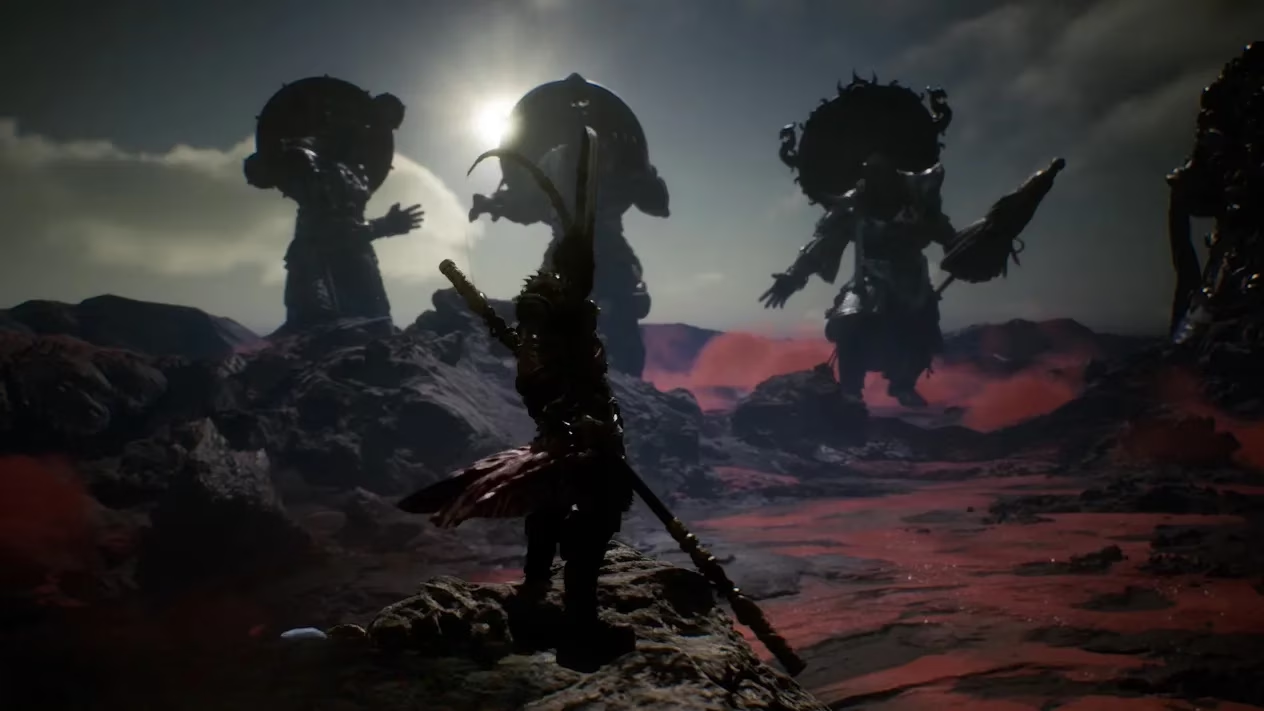
Wuchang plops the player into the Land of Shu during the late Ming Dynasty, right when that empire was crumbling like a stale fortune cookie. It’s got real historical flavor—Sichuan Province didn’t just pop out of nowhere—but don’t expect a dry textbook tour. The devs at Leenzee Games happily drench the setting in fantasy, twisting famous figures into nightmare fuel. Black Myth, on the other hand, doesn’t pretend to be anything but a lavish love letter to Journey to the West. Every grove, every mountain is ripped straight from myth. One minute you’re sweating through Black Wind Mountain, the next you’re roasting your eyebrows off at the Flaming Mountains. Both worlds are stunning, but only one will secretly make you Google "Ming Dynasty collapse" after a particularly brutal boss fight.
Armory Antics: Sticks versus the Kitchen Sink
Wukong’s weapon philosophy is simple: stick with the stick. He wields a single staff through the entire journey, but oh, what a staff. With 21 variants and unique skills—lava bursts, spine traps, you name it—that humble pole becomes a Swiss Army knife of pain. Wuchang, however, looks at that minimalist approach and scoffs. She brings spears, clubs, two-handed swords, and, because why not, a literal flamethrower. That’s right. A flamethrower in ancient China. With 25 weapons to swap between, her loadout feels less like an arsenal and more like a host’s approach to a barbecue—excessive and glorious. The backstep spear counter alone has caused many a player to squeal with delight.
Stance Dancing vs. Weapon Ballet
Here’s where the two games start flirting with different dance instructors. Wukong doesn’t hand you new weapon types, but he does offer three stances that can be switched mid-combo, each changing the rhythm of your pokes and smashes. Wuchang borrows a page from Wo Long: Fallen Dynasty and skips stances entirely. Instead, players can equip two weapons and juggle between them with a single button press. The result? A fluid, almost cinematic double-weapon tango. One moment you’re smashing a demon’s jaw with a club, the next you’re flinging a spear at its face while backflipping like an angry crane. It’s the kind of showboating that makes Wukong’s stance-switching feel a little too polite by comparison.
Parry? What Parry?
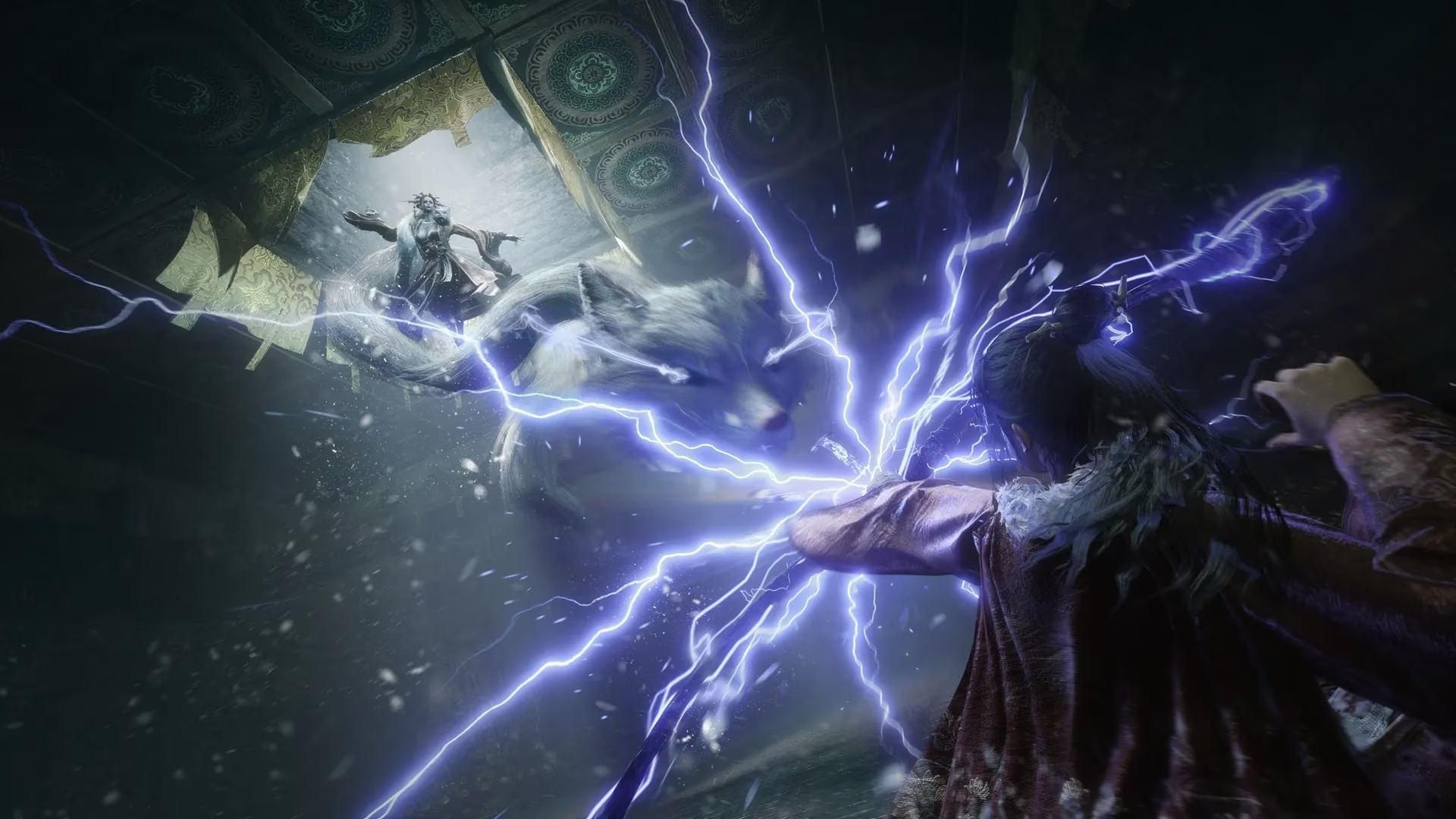
If you’re the type who gets a warm fuzzy feeling from a well-timed parry, Wukong might leave you out in the cold. The Destined One has no dedicated parry button—at least not by default. Instead, the game worships at the altar of the Perfect Dodge, rewarding you with extra Focus and a smug sense of superiority. Eventually, you can unlock some counterattacks like the Resolute Counterflow, but they feel less like a standard parry and more like a secret handshake you earn after 20 hours of pain. Wuchang, however, allows parrying… on certain weapons. And only if you’ve unlocked the skill. Some weapons can’t block at all. It’s as if the game whispers, "Oh, you wanted to be safe? How quaint." Most players end up dodging anyway, which is a bit like buying a fancy grill and then only using the microwave.
Skyborn Might & Qi-lling It
Resource management in these games is an art form. Wukong runs on Focus for heavy attacks and Qi for Spirits and Transformations. Focus builds through light attacks and Perfect Dodges. Wuchang’s equivalent, Skyborn Might, sounds like a collectible yoga pose but actually fuels her weapon skills and charged strikes. It accumulates through Perfect Dodges (called Shimmers—because even the terminology needs to be extra). The kicker? You spend it to turn your attacks into something that would make a god flinch. It’s essentially the same battery-recharge gameplay loop, but Wuchang’s version has a slightly more mystical ring to it, like you’re channeling the fury of a thousand fallen feathers.
Spellbook Shenanigans
Wukong is a bit of a minimalist when it comes to slinging magic. You’ve got six default spells split into Mysticism, Strand, and Alteration, and you can equip one from each category. Mix in Spirits and Transformations, and you’ve got enough variety to keep things spicy. But Wuchang? She scoffs at restrictions. The game throws 40 different spells at you and dares you to only pick four. Want to weave fireballs into a sword combo while wrapping yourself in a healing aura? Go for it. No mana, no cooldown, just pure, unadulterated magical chaos. It’s the kind of freedom that makes Wukong’s spell set feel like a tasting menu while Wuchang is devouring the buffet.
Transformations Gone Wild
Wukong can transform into various creatures, each with its own moveset and a durational meter. It’s like borrowing the body of a boss and going to town on their buddies. Wuchang, however, introduces the utterly unhinged Madness system. She doesn’t transform; she gets corrupted by the Feathering disease. Taking damage or dying pushes her Madness level higher, which boosts her damage output but also makes her squishier than a wet noodle. Kill enough human foes, and the Madness spikes further, unlocking new abilities. The real terror? Die at high Madness, and you’ll spawn an Inner Demon that guards your dropped currency—and it’s not shy about attacking everything in sight. You can even chug items to crank up your Madness on purpose. It’s the riskiest game of "hold my potion" ever devised.
Skill Tree Spaghetti
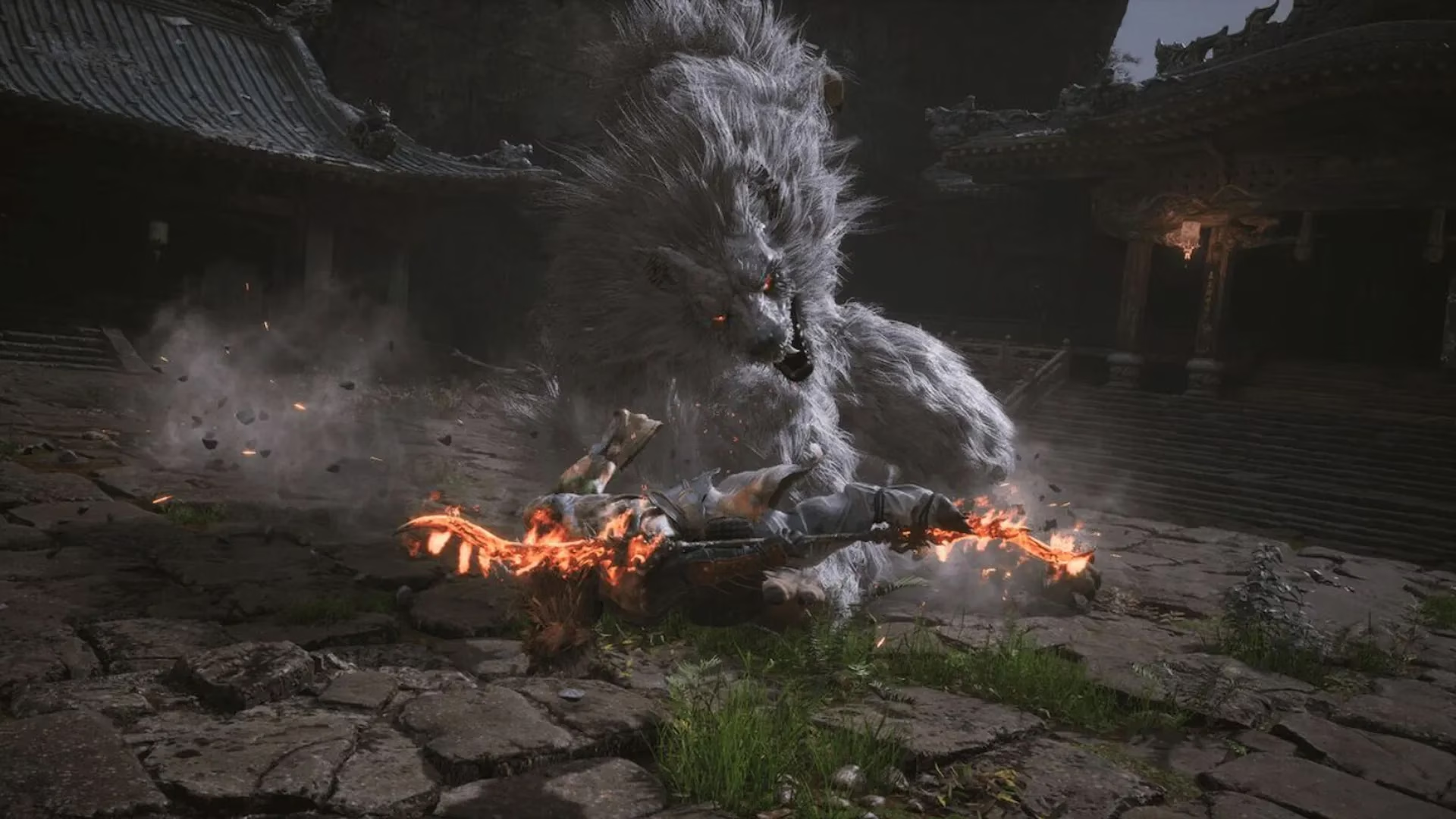
Both games let you respec for free, which is a mercy because staring at Wukong’s skill trees can feel like browsing a small library. Foundation, Staff Stances, Mysticism, Alteration—all neatly separated. Wuchang, however, crams everything into one massive, sprawling skill tree that has been compared, only half-jokingly, to Path of Exile’s neuron-obliterating web. Stat upgrades, new skills, weapon perks—it’s all in there. The 505 Games team said it’s not quite PoE-level, but it’s close enough to make casual planners break out in hives. You don’t level up Wuchang; you negotiate with her.
Build Your Own Pain
Freedom of expression is a touchy subject. Wukong’s core combat always feels like a staff-wielding ballet, no matter how many Spirits or Transformations you bolt on. Wuchang, in contrast, lets you frankenstein a build that’s either a pure melee blender, a spell-casting menace, or some unholy hybrid that makes both sides of the argument angry. The ability to pair a long-range spear with a heavy club and then sprinkle in a flamethrower spell creates the kind of build diversity that late-night Discord arguments are made of.
World Connectivity: Snakes vs. Hubs
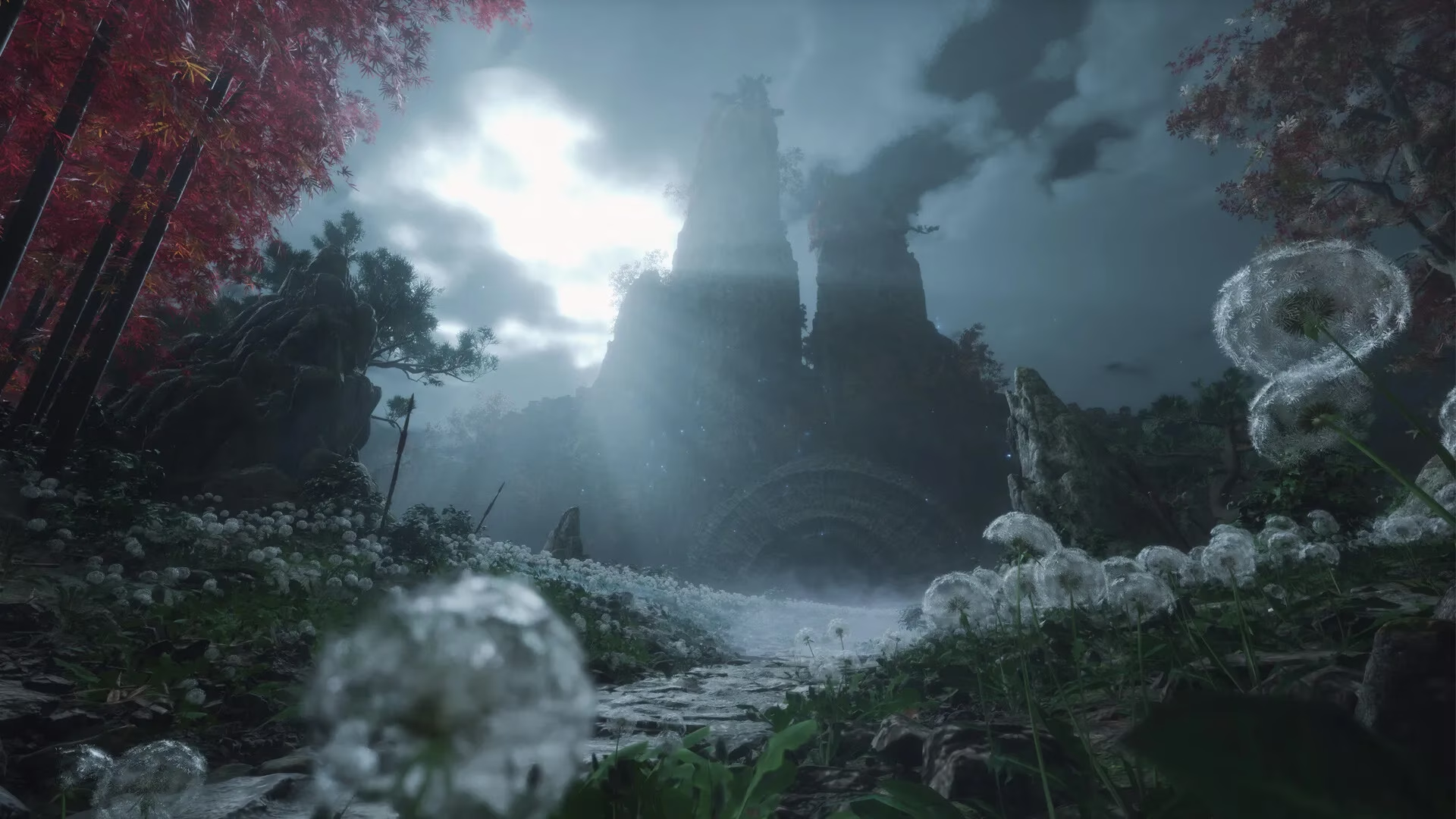
Remember Dark Souls 1’s interconnected world that blew everyone’s mind? Wuchang aims for that same "aha!" moment when you kick open a shortcut and realize you’ve looped back to the hub. The world is designed to be explored non-linearly, with landmarks as your guide instead of a mini-map. Black Myth, bless its heart, keeps its chapters separate. You can fast travel back to earlier areas, and secret zones abound, but the seamless, screw-with-your-orientation layout isn’t there. It’s like the difference between a tangled ball of yarn and a row of neatly separated threads.
Plot Freedom? More Like Plot Roulette
Wukong’s story flows in a predetermined order, even if you can gallop off to side areas whenever you like. Wuchang, however, promises a truly non-linear experience. Unknown to the player, the order they tackle bosses can shift the narrative, though the devs remain cryptic about how much it changes. The result? A game that feels less like a guided tour and more like being tossed into a dark room with a matchstick and a choice.
Friend or Foe Multiplayer
Wukong is a solo journey. Some NPCs may tag along briefly, but it’s your lonely stick against the world. Wuchang flirts with multiplayer—the exact details are still as fuzzy as a moth-eaten scroll, but the possibility of full co-op (or at least asynchronous ghostly assistance) looms in the background. For the socially inclined, that might just tip the scales. For lone wolves, Wukong’s isolation remains therapeutic.
Lengthy Torture Sessions
How long are you willing to suffer? On average, Wukong gobbles up about 38 hours for the main story, with completionists clawing their way past the 67‑hour mark. Wuchang, not to be outdone, boasts a 40‑to‑60‑hour average playthrough. That’s enough time to develop a personal grudge against at least three bosses and possibly one inanimate object. And let’s be honest, who hasn’t yeeted a controller after a bad dodge? No judgment here.
Endings Galore
Wukong offers a default ending and a true ending if you dive deep into side content. Wuchang, however, goes full Dark Souls cryptic, with more than three endings that are described as “completely different” and lead to “completely different fates.” Some of those fates, the devs hint, are decidedly not happy. You could technically slaughter everything and ignore all narrative threads, but the consequences will come knocking—hard. It’s the kind of replayability that makes the 60‑hour runtime feel almost cheeky.
Wallet Warrior
Finally, the most grounded difference: price. Black Myth: Wukong still sits at $60, which, adjusted for inflation and emotional damage, is probably fair. Wuchang: Fallen Feathers, meanwhile, launched at $50 and has the audacity to be available on Game Pass. That means players could dive into the Madness without even opening their wallets. It’s the sort of value proposition that makes you wonder if Leenzee Games is running a charity or a long‑con therapy session.
In the end, both games stare you down from your monitor, arms crossed, daring you to blink. One hands you a stick and says "become the legend," while the other shoves a flamethrower and a feathered curse into your trembling hands and whispers, "good luck." 2026 has never felt this brutally alive.